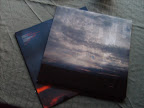
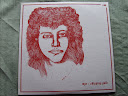
UbuWeb posted a link earlier this week of what is (presumably) the C side of a 2LP of 2008, John Cage/Terry Fox - HighFidelity. I had the pleasure of finishing the gatefold sleeves of the to 1000 copies limited remastered recordings of some rather experimental recording sessions in the middle of a lake. The album contained one vinyl of John Cage material and one with Terry Fox material, entitled Mureau. Copies were hard to come by so the link hunting continues for the rest of the release. Some outtakes from the gatefold can be found here.
The recordings and catalogue were released in conjunction with the exhibition HIGH FIDELITY Artists' Records in the Marzona Collection.
Mureau was originally released as a cassette on Edition S Press (S Press Tape No. 14). It was recorded at the S-Press studio in Hattingen, Germany, on October 3, 1972. Culvert was a 24 hour performance, with Bootz Hubbard and Bill Gilbert participating the 1st two hours. It was recorded at Clark Fork River, Missoula, Montana, USA, 1977. -discogs
On is a peculiar collaboration between Chicago-based percussionist and electronic artist Steven Hess and the French minimalist experimental composer Sylvain Chauveau. This collaboration's trademark is one that you won't encounter much: it defines the entire sound of the album without any interference of these two artists. The material is processed, or produced if you will, by a third party. The improvised recordings (done in the Acme Studio in Chicago in 2003) for this album where handed over to the Norwegian Helge Sten, who made this his last effort as the legendary Deathprod. Several years after the initial 2004 CD release on the French DSA label, this hailed material finally found its way to a proper vinyl release on Type Records.
It's needless to say that an album as critically-acclaimed as Your Naked Ghost Comes Back At Night belongs in the catalog of a label that holds more treasures of this kind. Released in their signature cardboard sleeve with only a few impressions of birds illuminating its cover, the album marks the milestone of the fiftieth release of this excellent UK label. But it takes more than audiophile nerd-talk and vinyl fetishism to acquire a score that denotes a "great release." On earns this easily with seven exercises of hypnotic drones and reverbed crackle.
The opening tracks ease the listener into the one hour death ambient listen with a mid-range focused piece where little spikes of crackle and consistent vibrant rumblings search their way over and through Deathprod's layers. Slowly transforming recordings form into a haunting choir of feedback, chanting over the omnipresent layers. As the album blooms towards the middle, the focus shifts to a deeper and more disturbing, yet minimal, dark ambient. On each listen I imagined myself being lowered in a well that becomes sealed, like some cruel medieval punishment. The banging hammers on the surface, sealing me in, swirl down the old stones and hit the water before I hear them as a rumble of gated reverb. The fourth track, "Oh Run Slowly", focuses on the higher end of the audible spectrum, as if it was the celebration to my new found home, ringing in an eternity of drone. Like a soundtrack to my sonic epiphany, it lightens the heavy mood that manifests more and more as the albums evolves.
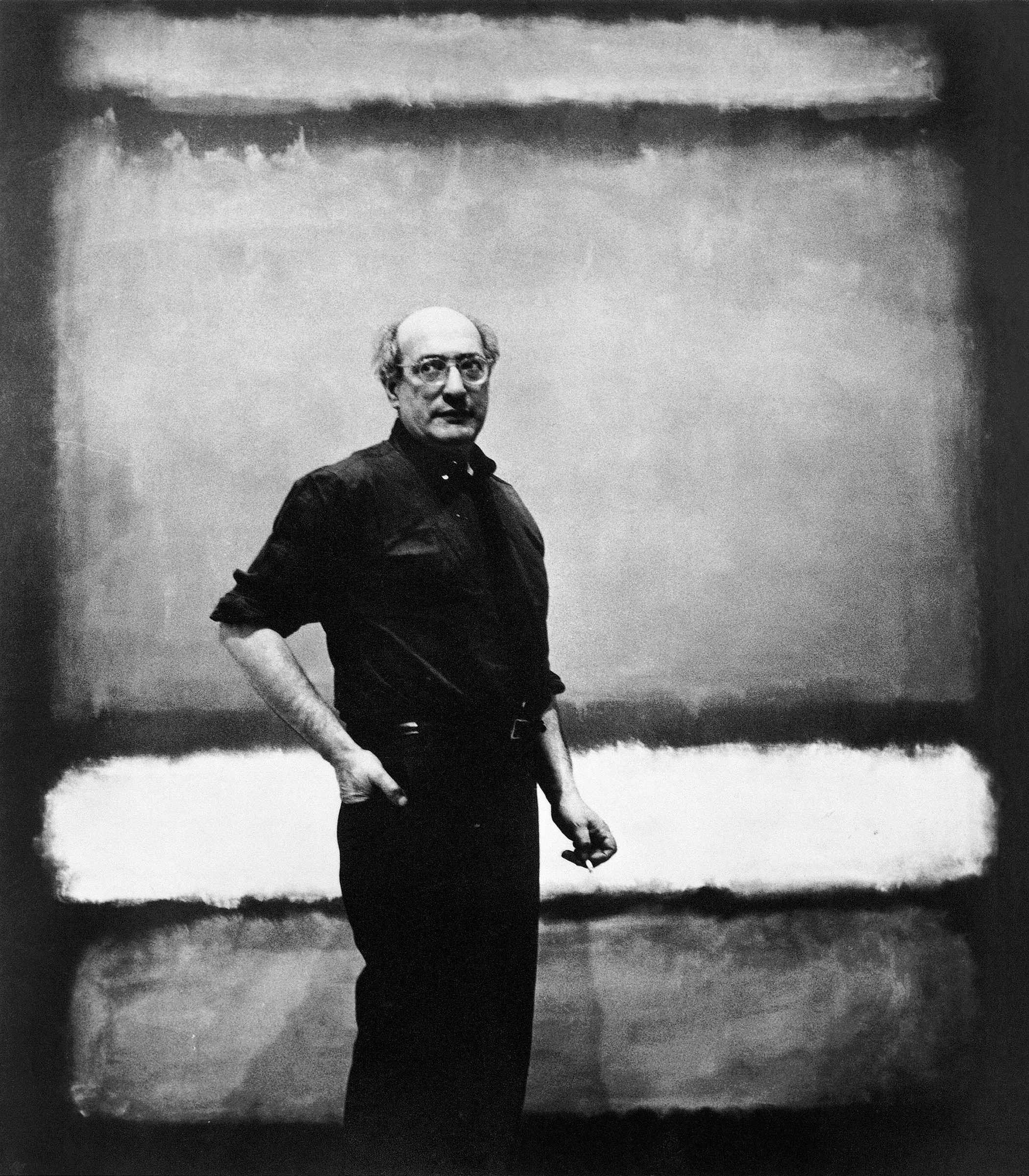
The closing half of Your Naked Ghost Comes Back At Night delves into the more hypnotic flavor of drone induced by the little rhythm of Deathprod's effects over the broader, slowly oscillating backdrop. This is where the true aficionados of this experimental niche will prevail over the easy listening, esoteric crowd that gets off on the plethora of introspective-sounding ambient releases. The nuances in the music become more subtle and are mostly found in the minor differences invoked by disturbances (or tweaks) in the resonating sound waves as they flow through an almost constant aural space. These minor fluctuations in audible shape are allowed to bloom by the less attention-grabbing opening half of the album, offering lengthened drones that will keep the attentive listener on the edge of his seat with every recurring swell. The seventeen minute closing track is an ideal soundtrack (or tribute even?) for gazing at Mark Rothko's work (or any seemingly objectless art for that matter).
If you were to give this album a listen without knowing its background, I'm sure you'd find that there is something about this release that makes it stand out from its competition. MGR's hypnotic mantra-feeling, mixed with Einstuerzende Neubauten's experiments - and my own excursions - in the catacombs of bridges aren't comparisons I'll easily be making with one of the many laptop ambient fiddlers that crowd the depths of MySpace, yet Your Naked Ghost Comes Back at Night earns it. Considering that this album finally found a decent home at Type, and a release on the best medium for music that mankind knows, makes it all that more precious.
4/10 It May Never End is the one-man project of a former DJ/Producer with an interest for dance and club music. After his adventures on the UK scene, he was struck by the post-rock genre - realizing the startling potential of this niche. An old love for the guitar was rekindled, and Such is Life is the result of that new found creative outlet.
The seven-track debut is obviously inspired by the usual suspects - This Will Destroy Mono in the Sky would be a band name suggestion that captures It May Never End's sonic pallette perfectly. With a plethora of similar bands aiming for their place in the spotlight of this crowded, global scene, the criteria for success come down to the finer details of the release. The performance, production, originality and creativity - even packaging - all make an album stand out from the pack. All of the pieces need to fit perfectly before an album or band can rise up to the level of greatness where it can be worthy of a score that leads the curve rather than following it.
It May Never End's debut material tells us that most of the basics are covered; the combination of the downright ambient with post-rock structures and climaxes is well spread over the album. There is a notable potential in the music as such, but the manner in which it is presented is one that recalls a recording in a rehearsal room with one microphone and a tapedeck. This can have a certain charm or romantic flair to it, but for a full length album, it doesn't work.
This is where the album offers plenty of room for improvement. As if somehow the mid-range sonic spectrum wasn't fully present on the release, most of the aural space is made up out of low and high frequencies. As a result, most of the bass and deeper background form a mismatched whole with the abundance of high range of frequencies. The middle range, and thus most of the guitar and rhythm, is lost in the poor mastering.
It's a shame that this artist doesn't get the chance to offer the complete picture of his music on this album. Most of the post-rock touch gets lost through the absence of it's frequencies, but when the ambient work takes center stage, the mixing issues tend to fade away. This can only spark a hope that IMNE's next effort will address this concern and push itself to the other side of the scoring curve. Who knows, perhaps the skill formed by working in electronica can make this project a leader in its niche. If you're the kind of person that likes the promise of what could be (in the form of a free download!), this is one to spend your bandwith on.
A bolt of lo-fi lightning searches its way through the thick skies and I found myself awakening, not knowing how I got where I was and unable to define my state of being; how could I be sure I was leaving the blissful mantra of silence and deep sleep? I rested my eyes for a few moments and inhaled my surroundings. I remembered an ancient wisdom and, confident in my faith that, however horrific (or redemptive) it might turn out to be, I'd follow the flow of the proverbial river.
The dark tunnel lightened as I confirmed my decision, filling the atmosphere with a dense and ancient graphite glow. Whatever the nature of the forces at work may be, whatever their objective was, I realized that this would be an endeavor where I had no choice but to comply with the unearthed rails ahead. My vessel reminded me of Blaine the Mono, and my surroundings confirmed this hypothesis. Waves of landscapes that once were stunning - but at the time of my passing were no more than victims of time that moved on - drew themselves past the windows of my mute railroad companion who needed to focus on the screeching of the rusty rails.
"Grave Robbing in Texas"
A shift in the speed told me that soon I had to leave the crazed people-carrier I had become accustomed to. Tension rose as my schizophrenic means of transportation came to a halt. As Blaine rested, I was lured in the direction of the dark, trembling monotone voice hiding in ambient space; the only distinct feature in the darkened surroundings I could make out. Drawn by the far-off wailing ghosts of haunted monks, I found my way to their grave and took in their omnipresent vibrations. They tested me as much as they could, cleansing the mind with the abundance of dark drones that spawned out of unrecognizable and untraceable sources.
"Dark Country Road"
The "Grave Robbing in Texas" had taken a lot out of me; in fact, the past eight minutes had been quite an ordeal at their most intense moments. I doubted that the deafening silence was a sign that I had completed my mysterious trip, so I examined my options to avoid my new-found status of Chinese volunteer.
The evaluation of my options was suddenly solved by the distant swelling of familiar sound of diminishing metal on corroding iron, aided by layers of soft droning ambient. I panicked, as I knew that the easiest (and perhaps only) way out of this silent madness was on that psychotic train that had such a prominent place in a book I so fondly read in my childhood and adolescence. I pulled myself out of my still state and rushed back, hoping I'd be able to catch him. Despite my effort, I had no choice but to proceed on foot. The sound of Blaine's friction began to fade away in the night as I followed the obscured road, which I could only assume was leading where I had to go.
"On Perdition Hill"
I'd been walking through the statically-charged silent surroundings for some time before Perdition Hill loomed out of the sonic scenery. I worked myself to the summit, hoping I'd be able to give my journey a direction, and as I took in the more prolific soundscapes, I was able to recognize some form of civilization in a city that I could only assume that it once was (or would be) Lud. As I gazed over its form, I realized that my interpretations were fueled by my desire to escape a "real" world that made even less sense to me than this fictional place. I decided to continue, as I had come this far already, and maybe there was redemption to be found down there.
"Slow Motion Prayer Circle"
As I descended towards the abandoned city, its rumbling faded and made way for yet another ephemeral entity. I stopped in the midst of an open area, illuminated by a rock formation where the Celts would be jealous of - massive pillars forced the charging winds to break and form an audible play of siren-like chants, hypnotizing me. They seemed to want to break off my journey, to force me to give up and enjoy their eternal, shapeshifting song until I'd dissolve into them. I pulled myself away from the soothing loops and went down the path towards Lud, entering the final stage of my endeavor.
"The Ghosts of Eden Trail"
I found my way to the final frontier and let the familiar, yet somehow richer ambient of this place soak in, anticipating a means to end this journey, one that would make the tale complete. I wandered around for a while, finding nothing but the repetitive, fluctuating beauty of cascading strings. All of a sudden, I recognized my former companion in the distance, coming to a raucous halt under this lost city. Blaine was waiting for me nearby, and I felt joy come over me as I remembered another ancient teaching; it was not the destination that was important, but the journey itself. This one offered many stunning sights, sounds and experiences - I had forgotten my ways when I had been waiting for a climax, and I must atone for my recklessness. Trembling, I caressed Blaine's shell, thanking him for letting me find my way again, and then boarded while I wondered what forgotten world I'd envision the next time I hit the play button.
William Fowler Collins's first release on Type Records (and second overall) tastes like the dark and cinematic ambient of labelmate Xela, and is right in place in the respectable list of artists who signed on this prolific label. This San Fransico based artist tells audible tales with a dark and organized structure that'll evoke visions of abandoned wastelands where scavengers are patiently waiting for their prey. Recommended if you like cinematic dark ambient with an intelligent approach, music that takes its time to evolve without using massive droning forces just for the sake of it.
Compilation 12 of The Silent Ballet featured my album art design and a bulk-load of interesting ambient and drone goodies. Check this link for a free download of the album and drop by The Silent Ballet of the Lost Children netlabel for more goodies.
Silence and electro-acoustic noise are the main components in the three suites of experimental music by the Italian Unidentified Sound Object (aka U.S.O. Project). Packed in artwork depicting the charcoal remains of a post-apocalyptic city lies a one hour and one minute audio tour by Matteo Milani and Federico Placidi. Their shared passion in the collaborative strength of audio and video inspired them to paint a soundtrack on Selfish's cinematic compositions. The lateral working method reminds of the premise applied in the Qatsi Trilogy, only with the difference that the U.S.O. Project's effort lean more toward John Cage's infamous 4:33 approach.
Silence is the dominating presence in the opening suite of the release, and although there is a distinct absence of sound at times, inspiration was drawn from the avant-garde technique of worldizing - recording and re-recording samples in various surroundings while tweaking the setting of speakers and microphones - which results in a complex, three-dimensional canvas. The latent presence of silence stretches out as a vast plain, evolving to the blunted ambient that haunts the transition of the opening compositions. Draped over the audible nothingness are layers of sound-constructions sketching the warped outlines of the gradually developing narrative and its accompanying sonic scenery.
Once the audio tour enters the suburbs of Inharmonicity via the tones of "Invisible Words", the noise component's parameter starts to display spastic shifts in its pattern. Screeching feedback and strokes of distorted noise break through cracks of the eroding city walls, battering the listener's ears. The rampaging assault of crushed magnetic pulses will try to force you to shorten your visit in this crumbling city. Near the closing of the main suite, an escape route from the sonic violence is found. In a maze of reverb-filled chambers, the omnipresent battering noise is muffled and offers a well-deserved breather while the audio tour steadily eases into its closing movement.
As the trip through Inharmonicity comes to an end, the distinct presence of glitching noise suddenly forces itself to the forefront, like a noise-accumulating whirlwind on a clear sky, until nothing remains besides a massive, pulsating wall of sound. The bone-crushing, distorted layers filled with shapeshifting samples disappear as suddenly as they arose. All that remains are the aftershocks in the form of distant, resonating soundscapes.
The release offers a high contrast between types of minimal explorations - featuring both the smallest of glitches and ear-battering droning noise, challenging the listener. The narrative properties of Inharmonicity each have their appropriate position in an enjoyable, complex electro-acoustic massage. The only problem is that due to the accent on the contrast, most of the release is difficult to listen to at a consistent volume level. So before buying the album have a sneak peak at what the full DVD has to offer, and see if you find it worth a few bucks more.
Girl Running, teaser from the dvd 'InharmoniCity'.
6.5/10 Svarte Greiner is no stranger here at The Silent Ballet - only recently he inspired my colleague Jermey Bye to advise us to listen to Kappe phenomenally loud. Not being an authority on Svarte Greiner's work, I choose to apply this advice to the job at hand, whether or not his latest three track effort - Man Bird Dress - and his live collaboration withAnduin are worthy additions to the back catalog of this upcoming Scandinavian doomscapologist and mastermind of the Miasmah label.
Man Bird Dress is one album title, three words, and also three track titles. Whether or not these words have any meaning or connection with the actual music is something that each listener will have to make out for him or herself, since there is more room for free interpretation than audible guidance on this release. Of greater importance, perhaps, is that the pieces have meaningful words for titles - where other drone or electronic artists often choose incomprehensible titles or plain numbering - which proves the aspiration to deliver three separate yet complete pieces rather than one sonic adventure, sliced for your convenience. Each piece has a different focus, bringing an attractive and refreshing breeze through the darkness of overdrive-accumulating ambient that is induced with horrific soundscapes. The base structure of "Man", "Bird", and "Dress" is fairly simple: start out with some creepy soundscapes, add doom, let it slowly swell to a sturdy whole and then ease the listener out. To top off the base-recipe, Svarte Greiner (Erik Skodvin) goes all-out from strange hypnotic chords on an acoustic guitar, to frenzied string movements and back to guitar with so much overdrive that it almost doesn't need to be played.
The result of this carefully-spread tapestry of haunting sound waves is rather stunning, intoxicating enough to claim your attention where most acts tend to depend on an audience with a long attention span. Although composed of heavyweight drone elements, the (easy) listening experience isn't negatively affected. A fluid structure and lack of sonic guidance make this album one of the most listenable in its niche. It is also because Svarte Greiner succeeds in breaking through the almost constant darkness of his own compositions with a ray of stunning, matte light every now and then that this album is more easily consumed than the average drone release.
--
5/10
During Svarte Greiner's first US tour in 2008, he sometimes teamed up with Anduin (Souvenir’s Young America’s Jonathan Lee), and after having each done their individual set, they usually ended up on stage together, closing the night. Their collaborative effort was recorded and released as Black River and contains two parts that delve deep in the flattened-out, droning haze of pulsating darkness. Compared to the cinematic feeling of Man Bird Dress, this release uses more electronics than the layered and polished studio efforts.
The fact that this is a live performance works for and against the release. When recording live material, it's hard to mimic the full-on layered sound of studio work, but when it comes to live electronics it a matter of being on top of your equipment and sticking to a few self-set parameters to keep your set together. Black River follows these premises, and I'm sure this was a very rewarding piece to bring live, but the fact is that the work will appeal only to those blessed with a long attention span or those who are hardcore fans of the artists. Although the material tends more to Anduin's lighter ambient, the whiff of Svarte Greiner's moody darkness casts an undefinable aura over the work. The sloth of the bending pads covered in smog, a slow pulsating that phases in and out, characterizes the release - it's a winning combination for the average Machinefabriek listener, but it's not likely this release will dominate The Silent Ballet's end of the year charts. Instead, this little limited vinyl goody from SMTG will surely find an honorable spot in that hardcore fan's collection.
Ambient, avant-garde, soundscape, post-industrial: four labels that are perfectly applicable to Minenhund. But there is something more to this release than what you'd expect from an album that is bound to be categorized in these niches. A quick glance at Strotter Inst.'s gallery proves that we're not dealing with something that can be classified so easily under such a general musical denominator. Sure, the result of this remarkable Swiss-based sound architecture is an album, but the manner in which the audio is created reminds more of conceptual art. A dark audible mind trip lies ahead for those who do not fear taking a leap into a sonic universe made out of molested vinyl and rebuilt turntables.
My advised setting to take in this hour of charcoal soundbites is absolute darkness and a set of headphones with the volume set just beyond the point that is considered healthy for your hearing. Minenhund translates (freely) as a person who spends his days slaving in the depts of pitch dark mines, so if you have the chance to replicate these conditions in any way, please do so.
The most noticeable thing about Christoph Hess' latest effort as Strotter Inst. is the focus on the use of the turntable as sound creating device rather than as a sound reproducing one. Five Lenco turntables make up the main part of the instrumentation/installation; modified styluses, rubber bands, duct tape and whatnot are used to create the meditative bass and looping rhythms. The consistency of the cascading loops forms the stomping engine that guarantee the blood flowing in the maze of pseudo-industrial rhythm patterns. The novelty of this release is the actual use of a few samples in the form of French gibberish - sometimes awkwardly high-pitched like there was a helium leak in one of the underground chambers of the sonic mine. Some cuts from a marching vinyl (that seem to be slightly out of place in the big picture) serve as a welcome change in the confined sound spectrum that has an overall fatness to it provided by the analog warmth residing in the vintage parts of the installation.
Strotter Inst. managed to combine some noticeable features of fellow sound-explorer Philip Jeck and audible tale creators Xela on this release, and ended up with an epic journey from a dusty surface to mind numbing, almost claustrophobic, depths where one thing is sure - if the listener manages to make it to the end of this challenging ride, she'll be counting down to the next shift of crawling through the rumbling darkness of neo-turntablism.
Loss Leader consists of two parts with several years in between composing and recording, but the sound of Larvae is etched in a monolith - concrete and defined as mathematics, yet organic and intelligent, soothing and at the same time uplifting, with enticing dramatic builds. Upon listening to the music, the references that could be heard range from epic instrumental post-rock bands to sampling legends, and brought in a fashion that has very few criticisms in terms of sheer "listenability."
Opening the proceedings is Larvae's more contemporary work, offering four pieces of dark and moody ambient entwined with the warmth of a Fender Rhodes, an awkwardly obscured melodica, and a drummer that sounds like he could just be Josh Davis himself laying down some loops. Although having a breathtakingly shaded atmosphere and a lazy rolling vibe, there's a distinctly upbeat quality to this first half of the presented feature. The combination of the bass that seems to be playing a stoner's lullaby, the drummer who is exploring trip-hop drumlines from over a decade ago, mathematically challenged drum-computers, and vibrant ambience all work together on the Turning Around EP chapter of this release.
"Attention everyone, this is an emergency broadcast. The unpleasant noise you're about to hear coming from your radio is not a mistake, please do not turn off your radio but turn up the volume on your receiver is high as it can go. So you can make the sounds we broadcast as loud as possible"
Although this would be the logical (both sonic and chronological) choice of an opening, the second chapter of the album, the Monster Music 2 EP foursome, starts with this sampled instruction. I urge you to comply anyway. The closing half of the album takes the listener back (as this is in fact also the extension of the 2003 Monster Music EP) with breaks and bass lines hailing from an age where trip-hop was digging its grave and dubstep was safely guarded in the womb of drum and bass. The protagonists of the last four tracks include clear rhythm patterns and self-destructing, almost industrial-sounding, beats only guided by a submerging synth on the low end of its chords - but always with that spine-tingling new layer on the right moment. These organic IDM tracks remind of obscure, smoke-filled chill-out rooms where those who seek more than fast crowd-pleasing thrills roam around and lose themselves in the music until dawn.
It's a shame that the good people of the Ad Noiseam label and Larvae opted for an environmentally-friendly release by cramming two EPs on a single non-decomposing disc. Don't get me wrong, it's not my fantasy to see humanity drown in its own filth, but if that's the reason to molest two sufficiently-structured pieces of enjoyable post-rock meets electronica, you didn't think it through. A simple brainstorm session could've ended with a more creatively appealing solution without giving the impression that there's a label cleaning stock or a void in artist activity to be filled. Loss Leader is, nevertheless, one to have if you're for introspective post-rock with a dash of IDM or if pre-dubstep breaks with a hint of droning guitars sounds appealing. It would've been an added value if the concept had matched the music of the release, but it was not to be.
Blurping about strange German sounds on The Silent Ballet Release of the Month: January 2009 article.
If judged as a follow up to the first volume of the Xerrox series - or his latest album Untxt - it's safe to state that the album disappoints. Not a single beat, uplifting pattern or surprising sample is to be found on the second panel of Alva Noto's audible “new world” exploration. For the brave few who are able to discard their expectations lies the challenge to embark on an unguided tour through a sonic landscape of a post-nuclear holocaust. Resurrecting static and spasmodic digital conversations are duplicated (Xeroxed) over an uncatchable, extra-terrestrial bass, which tries to shift its shape into something sustainable on the monotone surface. Those who don't fear the dark side of the Xerrox premise might find themselves haunted by ghosts on radiation-infested tape, but redemption can be found in the rumbling aftermath of vibrant delays and noise-scaping waves of strings. Just make sure you check your oxygen level and Geiger calibration before you head out there.
A conceptual album referring to Würm, the last ice age, is a nice idea to build an album (or series) around, but the problem here is that the only things we know about that last ice age is pure scientific fact. Thus, we have only a perception depending on the interpretation of facts at hand and the always-evolving techniques to obtain these facts. Oöphoi's sixty-five minute enduring sound-interpretation of the Würm is, to say at least, minimal in every meaning of the word. An Aerial View displays nothing more than a portrait of a solid frozen landscape, curving at the horizon with a glistening sun breaking through the frost in the thin air.
By taking on the 'flight over the Würm' point of view, An Aerial View fails to grasp the intensity and violent force of the biting cold and always transforming ice. After about fifteen minutes I was anticipating technical difficulties in order to get some variety in the rather sleep-inducing soundscape (note: not soundscapes). Freezing fuel tubes, rotors struggling to work in the air impregnated with ice: the thrill of going to the boundaries of mankind, and technical possibilities are missing. I've been waiting for the emergency landing I was hoping he had to make, and I still am craving for it.